How to Protect Your Heating System During Power Outages
When the lights go out, your first thought might be the refrigerator or the Wi-Fi. But your heating system is quietly at risk, too. A sudden power outage can bring more than just a chill—think fried circuits, frozen pipes, and a restart that’s anything but simple.
At I.Z. Heating, we get calls every winter from homeowners in situations just like this. With decades of experience handling heating emergencies, we know how quickly a small issue can snowball when power blinks off. Let’s walk through practical steps to keep your home’s heart—your heating—safe, warm, and ready for anything.
Why Power Outages Put Heating Systems in Danger
A power outage is like a surprise pothole in the road for your heating system. One minute, everything hums along. Then—bam—darkness. Here’s what can happen:
- Power Surges: When electricity comes back, it often rushes in. That jolt is tough on sensitive furnace controls, thermostats, and circuit boards.
- Frozen Pipes: No heat means the temperature inside your home can drop fast, especially in subzero weather. Pipes—especially those near exterior walls—can freeze and burst, leading to water damage.
- Hard Restarts: Some heating systems don’t like being woken up abruptly. They can struggle to reboot, show error codes, or refuse to turn on at all.
Each risk can lead to costly repairs or even full furnace replacement. According to the U.S. Department of Energy, heating system failures during outages are a leading cause of wintertime emergency service calls. Staying ahead of the storm—literally—can save time, money, and comfort.
Quick Safety Checklist 🛑
Before, during, and after a power outage, use this checklist to protect your heating system and home:
- Turn Off Your Furnace or Boiler: If you know an outage is coming (or once it starts), switch off the system at the thermostat and breaker. This helps avoid a damaging surge when power returns.
- Unplug Portable Heaters: Prevent accidental restarts and potential fire hazards.
- Check for Gas Smells: If you smell gas, leave your home immediately and call emergency services.
- Keep Doors Closed: Trap heat by closing doors to unused rooms.
- Monitor Indoor Temperature: If it drops below freezing, open cabinet doors under sinks to help pipes stay warmer.
- Don’t Use Stoves or Ovens to Heat: This is dangerous and can cause carbon monoxide buildup.
When Should You DIY, and When Should You Call a Pro?
Some steps are safe for most homeowners. Others—especially with complex systems—are best left to the pros.
DIY: What You Can Safely Handle
- Turning off your furnace or boiler at the breaker and thermostat.
- Checking and replacing accessible air filters.
- Inspecting visible vents for obstructions.
- Safely resetting your thermostat once power is restored.
Call a Pro For:
- Strange noises, burning smells, or error codes after power returns.
- Systems that won’t restart, even after you try.
- Blown fuses or tripped breakers that keep recurring.
- Any sign of water near your furnace or boiler (from frozen pipes or leaks).
- IAQ Testing near you if you suspect air quality issues after an outage.
Heating systems are like cars—they look simple on the outside, but inside, they’re a maze of electronics, gas lines, and safety switches. When in doubt, call for help. For immediate concerns, see our 24-hour emergency service.
What Do Heating Pros Do When They Arrive?
When a technician from I.Z. Heating arrives, they’ll:
- Inspect the System: Visual check for damage, leaks, and electrical issues.
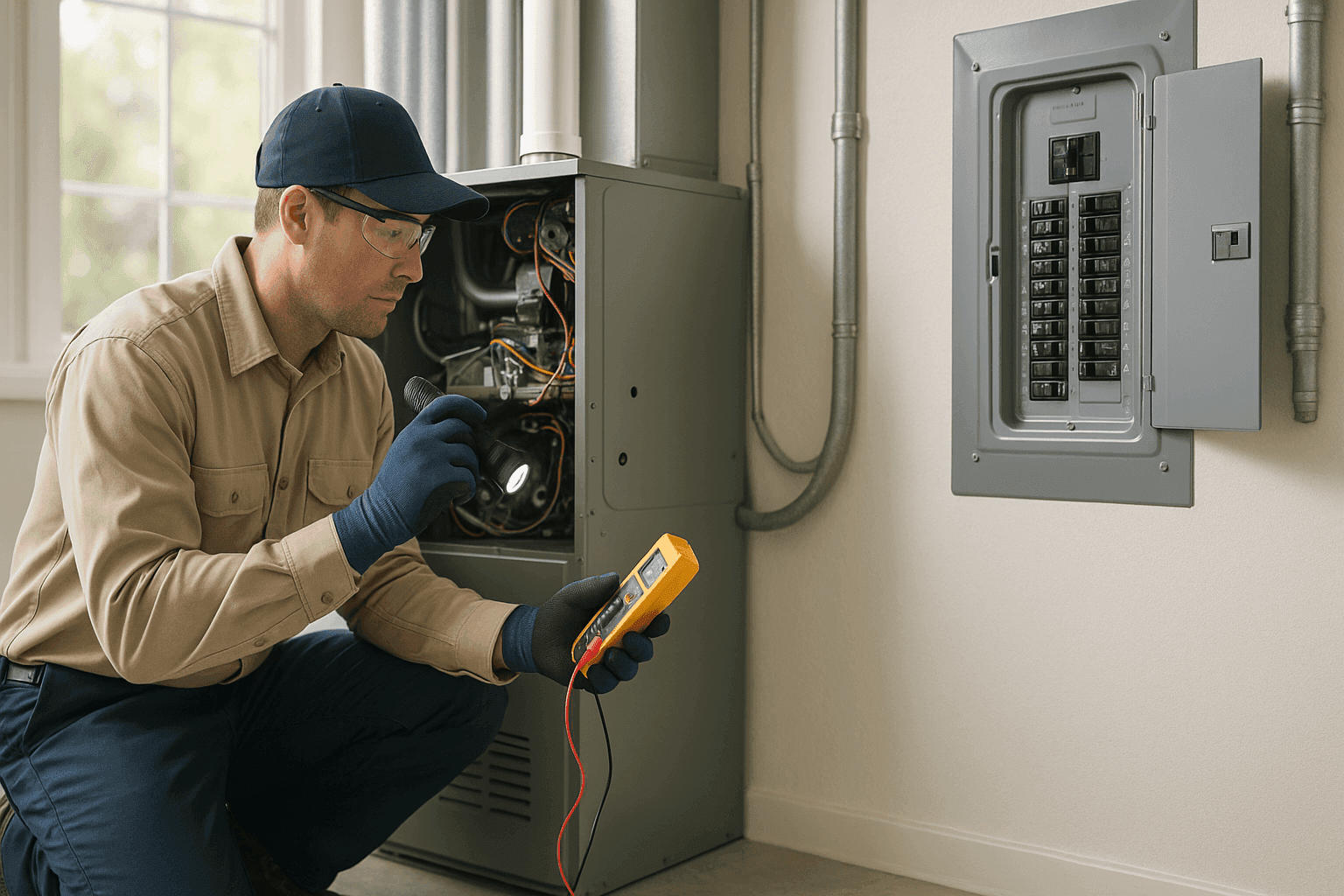
- Test Electrical Components: Using meters, we check that surges haven’t fried control boards or relays.
- Restart Safely: We follow manufacturer and code guidelines (like those from the National Fire Protection Association) to ensure a safe restart.
- Check for Gas and CO Leaks: Safety first—always. Sensitive detectors spot what your nose can’t.
- Evaluate Air Quality: Sometimes, outages affect IAQ. We offer IAQ Testing near you.
- Advise on Repairs or Upgrades: If surge damage is found, we explain options and next steps.
Prevention & Maintenance Tips
You can’t stop storms, but you can outsmart them. Here’s how:
Install Surge Protection
A whole-house surge protector acts like a helmet for your home’s electronics—including your furnace. It diverts excess voltage away, reducing the risk of fried components.
Backup Power Options
Consider a standby generator or battery backup for critical systems. These keep your heating running during outages. Always use a licensed electrician for installation.
Routine Maintenance
Regular heating maintenance is like an annual physical for your furnace. Catching small problems before they become big ones is key. Ask about our seasonal tune-ups.
Insulate Pipes
Wrap exposed pipes, especially in basements and crawlspaces. This simple step can prevent freezing even if your heat is out for several hours.
Smart Thermostats
Some models have battery backups or power-loss memory. These can help your system recover smoothly and maintain heating schedules after an outage.
Costs & Time Factors: What to Expect
Every outage is different, but here’s a general idea:
- Simple Restart: If no damage, a professional restart can be quick—usually under an hour.
- Surge Damage Repair: Replacing fried boards or relays can take a few hours and varies in cost depending on your system’s age and parts availability.
- Frozen Pipes: Water damage repair can be significant—prevention is cheaper than clean-up.
- Emergency Service: After-hours calls may cost more, but catching problems early prevents bigger bills down the road.
Remember, maintenance is almost always less expensive than emergency repairs.
When It’s an Emergency
Some signs mean you need help—now:
- You smell gas.
- Water is leaking near your furnace or boiler.
- Your heat won’t come back, and the temperature is dropping fast.
- You see sparks, smoke, or exposed wiring.
Don’t risk your safety. Call for 24-hour emergency service right away. Your family’s safety and comfort come first.
FAQ: Heating and Power Outages
Can I restart my furnace myself after an outage?
You can try, but if it doesn’t respond or you see error codes, call a professional. Modern systems sometimes need a specific reset process.
What if my pipes freeze?
Turn off your main water supply and call for help. Never use open flames to thaw pipes.
Will a power outage ruin my furnace?
Not always, but repeated surges or improper restarts can shorten its life. Surge protection and maintenance help prevent this.
How often should I schedule heating maintenance?
At least once a year—ideally before winter hits. This keeps your system in top shape and ready for surprises.
Local and Seasonal Considerations for Belmont, Massachusetts
Winters in Belmont can be unforgiving. Extended outages are rare, but deep freezes can drop temps fast. If you live in an older home, your pipes and heating system are especially vulnerable. Schedule regular service and consider upgrades like surge protectors or backup generators to stay ahead of the next Nor’easter.
Need peace of mind? Heating Maintenance help in Belmont, Massachusetts is just a call away.
Keep your home warm, safe, and ready for anything. For heating emergencies, routine maintenance, or advice on upgrades, Call I.Z. Heating now — or reach us anytime at 844-403-0449 .